Diabetes Log Book: A Designer's Guide to KDP Publishing
Understanding the Core Structure of the Diabetes Log Book
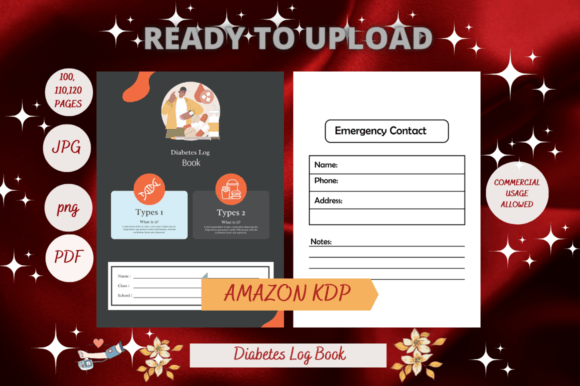
For self-publishers and entrepreneurs in the health niche, the physical product is just as vital as the content inside. The Diabetes Log Book is not merely a collection of pages; it is a carefully structured tool designed for utility and durability. We are looking at a product suite specifically engineered for Amazon KDP, comprising three distinct books with page counts of 100, 110, and 120 pages. This tiered approach allows creators to test different price points or offer variety to their audience without designing from scratch each time.
The specifications are standard for the industry but crucial for professional results: an 8.5" x 11" dimension. This size is the gold standard for log books because it provides ample space for users to write down glucose levels, carbohydrate intake, and medication details without feeling cramped. From a graphic design perspective, this larger canvas allows for cleaner visual hierarchy. You can utilize distinct headers, subtle grid lines, and adequate white space to ensure the user experience is intuitive. The "No Bleed" testing confirms that the interior layout is safe, meaning text and borders won't accidentally get cut off during the printing process—a common pitfall for new publishers.
Strategic Branding: Why Format Matters
When you download the Diabetes Log Book for KDP package, you receive PDF, PPT, PNG, and JPG formats. This versatility is a massive advantage for brand identity and marketing. The PDF is your print-ready powerhouse, but the inclusion of PPT (PowerPoint) files speaks to the content creator who wants to customize. PowerPoint is surprisingly effective for simple editorial design tweaks if you don't have access to Adobe InDesign. It allows you to adjust fonts, colors, and layout elements to match a specific brand style before exporting back to PDF.
The image formats (PNG and JPG) are your marketing assets. As a small business owner or marketer, you cannot rely solely on Amazon’s listing page. You need high-quality mockups for social media graphics, email newsletters, and your own website. Using the provided JPGs allows you to create lifestyle imagery—showing the book on a desk next to a stethoscope or a healthy meal—without needing to order a physical copy first. This speeds up your go-to-market strategy significantly.
Designing for the End-User: Readability and Utility
The success of a Diabetes Log Book hinges on readability. Unlike a novel or a coffee table book, this is a functional tool. The typography choices within the template need to prioritize clarity over flair. While display fonts and script fonts look beautiful, they have no place in the data entry fields of a medical log. Instead, the interior likely relies on clean sans serif fonts for headers to convey modern medical efficiency, paired with a highly legible body text.
For those looking to customize the typeface, consider the psychology of your audience. People managing diabetes are often looking for control and calm. A chaotic, overly decorative handwritten font might subconsciously increase anxiety. Instead, opt for a balanced serif font for the descriptive text to add a touch of warmth and authority, while keeping the actual log lines clean and open. The goal is to create a visual hierarchy that guides the eye naturally from the date to the reading, reducing friction for the user.
Practical Application for Entrepreneurs
If you are a crafter or a hobbyist looking to break into the low-content book market, this bundle offers a low-risk entry point. However, to stand out, you need to treat this as a design asset rather than a final product. The "Ready to Upload" nature of the files is convenient, but the real value lies in the customization potential.
Consider the cover design. The interior is functional, but the cover is your logo design and brand identity for the book. You might pair the clean interior with a bold, modern premium font on the cover to signal quality. Think about packaging design principles: how does this book look as a thumbnail on Amazon? Does the title pop? Using the high-quality PDF ensures that when a customer downloads a digital version or prints a page, the lines are crisp and vector-sharp.
Key Features for KDP Success
- Print Ready PDF: Ensures zero formatting errors during the upload process to Amazon KDP.
- Multiple Lengths: Offering 100, 110, and 120-page variations allows for A/B testing to see which length converts better in the marketplace.
- Standard Dimensions: The 8.5" x 11" size is expected by consumers, ensuring high satisfaction and low return rates.
- Multi-Format Assets: PNG and JPG files allow for immediate creation of social media graphics and web design elements to promote your new listing.
Choosing the Right Font Pairing for Customization
If you decide to open the PPT or PDF in an editor to tweak the design, font pairing becomes essential. Since the Diabetes Log Book is a health tool, you want to avoid creative fonts that are hard to decipher. A strong recommendation is to use a geometric sans serif font like Montserrat or Open Sans for the main headers. These fonts are modern, clean, and convey a sense of medical precision.
For sub-headers or introductory text, you can introduce a softer serif font like Merriweather or Lora. This contrast creates a professional editorial design look without sacrificing the functional nature of the log. Remember, the goal is not to win a typography award, but to create a book that people enjoy using every day. Consistency in your typeface usage builds trust; if the book looks professional, the user feels more confident using it to track their health data.
By leveraging these high-quality, tested files, you are not just selling a notebook; you are providing a reliable tool for health management. Whether you are a publisher scaling your catalog or a designer helping a client, the Diabetes Log Book bundle provides the necessary foundation for a successful product launch.