Organize Your Finances with a Payroll Record Book
For small business owners, freelancers, and independent contractors, the administrative side of running a business often feels like a secondary job. While creative energy fuels your products and services, the structure of bookkeeping is what keeps the lights on. One of the most critical aspects of this structure is payroll management. Even if you are a solopreneur paying yourself, or a growing startup managing a small team, maintaining a clear, physical ledger is often more reliable than scattered digital spreadsheets. This is where the utility of a dedicated Payroll Record Book becomes undeniable.
The Practicality of Physical Payroll Tracking
In an era dominated by cloud computing, there is a distinct advantage to having a physical backup. A Payroll Record Book serves as a tangible history of your financial obligations and transactions. It is not just a notebook; it is a specialized tool designed for specific data points. Unlike a generic journal, these books are formatted to handle the complexities of wages, deductions, tax withholdings, and net pay. The visual characteristics of a well-designed record book prioritize clarity over decoration. You will typically find clean grids, ample space for names and dates, and a layout that allows for easy scanning of data. The "personality" of such a book is strictly professional—it conveys order, accountability, and attention to detail.
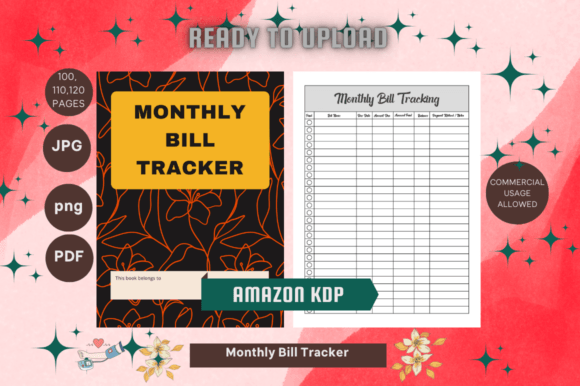
When you download a professional set, such as the Payroll Record book for KDP available in PDF, PPT, PNG, and JPG formats, you are acquiring a tested design asset. These are not merely digital files; they are print-ready templates optimized for specific publishing standards. The dimensions of 8.5" x 11" inches are the industry standard for US business documents, ensuring they fit perfectly into filing cabinets and office storage systems. This consistency is vital for maintaining a cohesive brand identity, even in your internal documentation.
Visual Hierarchy and Design in Bookkeeping
While we often discuss visual hierarchy in the context of web design or marketing materials, it is equally important in editorial design for functional documents. A good payroll ledger uses typography and grid systems to guide the eye. The headers must be distinct from the data rows to prevent confusion. The spacing between columns must accommodate different handwriting styles without making the page look cluttered. This is a subtle form of modern typography applied to a utilitarian purpose.
The appeal of these books lies in their neutrality. They function as a blank canvas for your financial data. Whether you prefer a minimalist aesthetic or a more structured look, the interior design of these pages supports the content without overpowering it. This is a key principle in packaging design and print design: the container should enhance, not distract. By using a high-quality template, you ensure that the focus remains on the accuracy of the numbers, which is the ultimate goal of any record-keeping system.
Applications Beyond Standard Employment
The versatility of a Payroll Record Book extends beyond traditional employer-employee relationships. Crafters and hobbyists who sell their goods online often need to track payments to assistants or seasonal help. Content creators and influencers frequently collaborate with photographers, editors, and managers who require accurate payment logs. In these scenarios, a dedicated book provides a professional touch that a smartphone app cannot replicate. It creates a paper trail that is easily accessible during tax season or when resolving disputes.
Furthermore, for those involved in the Amazon KDP (Kindle Direct Publishing) market, these books represent a specific niche of low-content books. The market for business planners and record-keeping templates is robust. Entrepreneurs looking to sell their own designs can study these templates to understand what features are essential. The inclusion of multiple file formats—PDF for printing, PPT for editing, and image files for previews—demonstrates a comprehensive approach to design assets. It shows an understanding that the end-user needs flexibility in how they access and utilize the content.
Choosing the Right Format and Structure
When selecting a payroll record system, the physical attributes matter. The page count—whether 100, 110, or 120 pages—determines the longevity of the book. A smaller business might find a 100-page book sufficient for a year, while a larger operation may require the extended capacity of 120 pages. The "No Bleed" testing mentioned in high-quality templates is a technical detail that ensures your data remains within the printable area, preventing the frustration of cut-off text. This is a crucial aspect of commercial font usage and layout design; margins must be respected to maintain readability.
The aesthetic of the cover also plays a role, though less critical than the interior. A clean, professional cover reinforces the seriousness of the content inside. It signals to anyone handling the book—be it an accountant, a business partner, or a tax auditor—that the records are maintained with care. This contributes to a perception of professionalism and consistency, which are pillars of a strong brand strategy.
Integrating Physical Records into Digital Workflows
It might seem counterintuitive for a digital creator or marketer to rely on a physical book, but hybrid systems are often the most resilient. You can use the Payroll Record Book for daily or weekly entries, then transfer the totals to a digital spreadsheet for long-term storage and analysis. This practice helps in cross-referencing data and catching errors. The physical act of writing can also improve retention and attention to detail, reducing the likelihood of overlooking a discrepancy.
For graphic designers and brand strategists, the layout of these books can serve as a case study in functional design. Observing how space is allocated for different types of information can inspire similar efficiency in other projects, such as invoice design or client intake forms. The principles of readability and spacing are universal, whether you are designing a serif font for a luxury brand or a sans serif font for a tech startup.
Ultimately, a Payroll Record Book is more than just a stack of paper; it is a tool of empowerment. It brings order to the chaos of financial management, allowing you to focus on what you do best—creating, innovating, and growing your business. By investing in a well-structured, print-ready system, you lay a foundation of trust and transparency that supports your operations for years to come. Thank you for exploring the potential of this essential business tool. Stay tuned for more resources, interiors, and creative assets designed to streamline your workflow.